My Approach
Design the work. Build the system. Make it easier to use again.
I work across motion, branding and digital design, but the common thread is structure. I look for the repeated decisions, platform constraints and production friction behind a brief, then design a solution that can hold up beyond a single asset.
Working model
01
Brief
Audience, platform, objective and constraints.
02
Decisions
Hierarchy, motion behaviour, format logic and reusable rules.
03
System
Assets, templates and workflows that remain useful in production.
Career evolution
My role changed when the work started repeating.
As volume, platforms and team needs grew, the useful question stopped being only how to make one asset and became what structure would make the next ten easier to make well.
01
Make the work
My motion-design work focused first on producing strong individual assets across broadcast, social and digital content.
02
Find the pattern
As production demands increased, I started identifying repeated decisions: layout logic, animation behaviour, asset organisation and handoff friction.
03
Enable reuse
That led to templates, clearer frameworks and production structures that other designers can understand, adapt and extend.
Process
From creative brief to a system that can keep working.
I do not treat every project as the same five-step checklist. The emphasis changes with the brief, but these are the decisions I return to when moving from an idea to a reliable creative system.
The goal is not process for its own sake. It is to make the work clearer, easier to adapt and more dependable in production.
01
Frame the problem
Start with the audience, platform, objective and constraints. The first job is to understand what the work needs to do before deciding what it should look like.
02
Define the system
Establish the hierarchy, layout logic, motion behaviour and reusable rules behind the assets. This is where isolated design choices become a framework.
03
Design in context
Test the system in the environments where it will actually live. Formats, devices and editorial rhythms should influence the design rather than being treated as export settings at the end.
04
Build for reuse
Turn the approved direction into assets people can use reliably: templates, adaptable components, motion toolkits and clear production structures where they add value.
05
Refine through use
A useful system should improve once it meets real production. Feedback, bottlenecks and repeated tasks reveal where rules can be simplified, strengthened or automated.
Approach in practice
Systems thinking only matters when it changes the work.
Purely For You is one example: the brief grew into a modular identity spanning brand, website, motion and content systems.
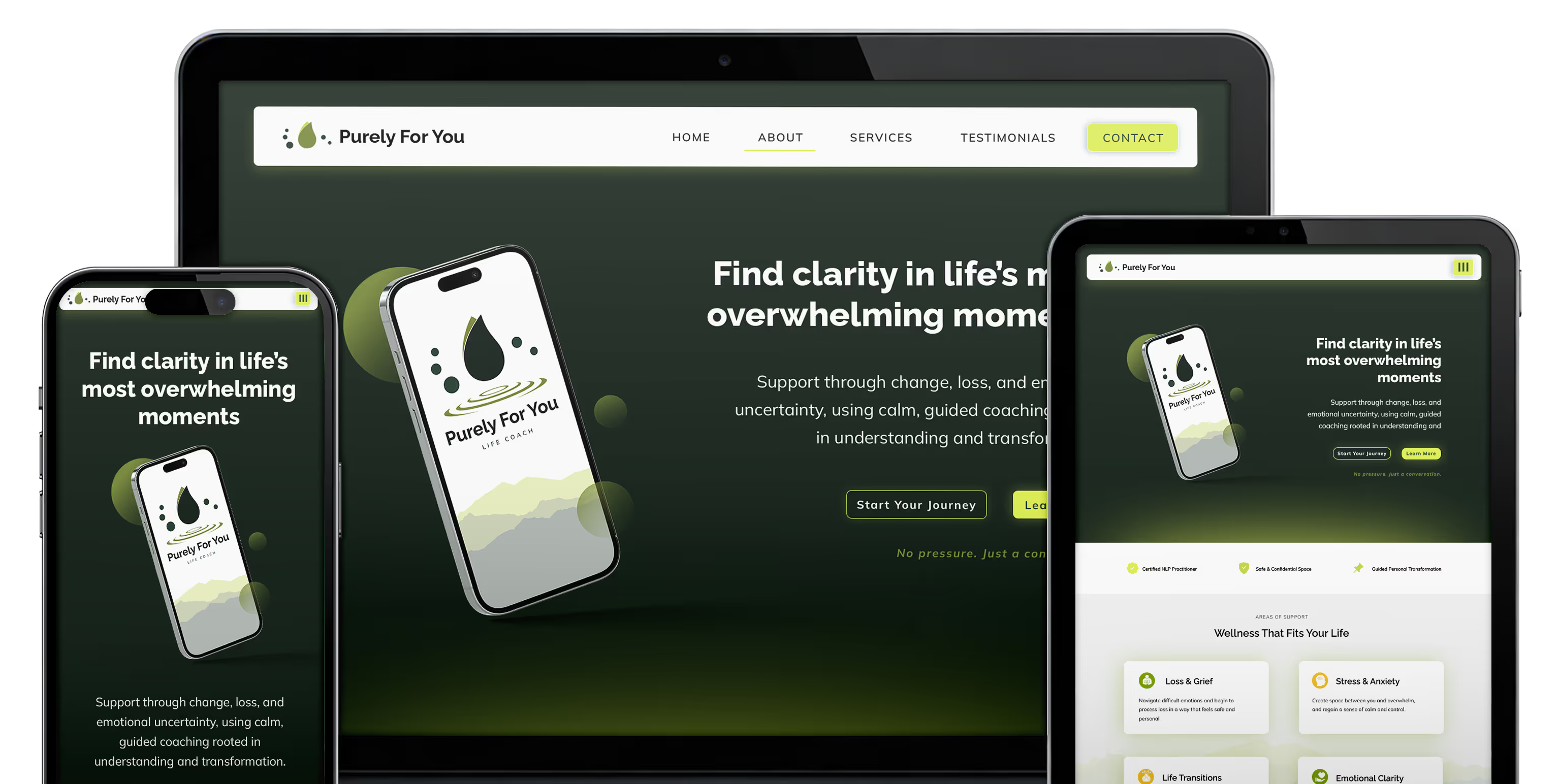
Purely For You
A flexible identity designed to work across more than one output.
The project began with no structured identity across platforms. The response was to define a flexible brand system that could support different content types and repeatable production.
Challenge
No structured identity across platforms
System
Brand identity, website concept, channel branding and motion
Production goal
Build a flexible system, support different content types and enable repeatable production
Experience
The goal is not more process. It is better creative work that survives production.
For the full career detail, view my CV. To see the systems in context, explore selected work and the decisions behind it.
10+ years: design experience across broadcast, social and digital media.
Creative systems: templates, reusable motion structures and clearer production workflows.
Team support: mentoring designers and improving how creative work is organised and handed over.